

Academic Experts
Academic Experts
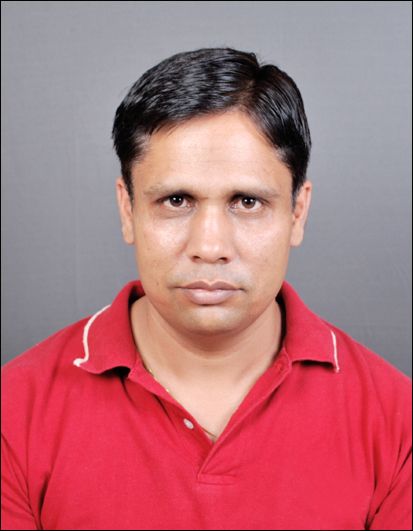
Dr. Satyendra Kumar
ASSOCIATE PROFESSOR
satyendra.kumar@jiit.ac.in
Biography

Dr. Satyendra Kumar is an Associate Professor in the Department of Electronics & Communication Engineering at Jaypee Institute of Information Technology (JIIT), Noida. With a Ph.D. in Robust Low Power SRAM Design from JIIT and both B.Tech and M.Tech degrees from IIT Roorkee, he brings deep expertise in design and simulation of steep subthreshold slope semiconductor devices and low power Static Random-Access Memory (SRAM) circuits. Dr. Kumar brings extensive industry experience, having worked on the development and characterization of 90 nm, 65 nm, and 55 nm memory compilers for leading foundries like TSMC, IBM, and UMC and others. Dr. Kumar is passionate about innovation in low power semiconductor devices and memory circuits, he actively contributes to research and academic development.

Research Highlights

Dr. Satyendra Kumar at JIIT, Noida, has made significant contributions to the design and simulation of steep subthreshold-slope semiconductor devices, focusing on Tunnel Field-Effect Transistors (TFETs), Negative Capacitance Field-Effect Transistors (NCFETs), and low-power Static Random-Access Memory (SRAM) designs. His research addresses the critical need for energy-efficient devices in ultra-low-power applications by overcoming the limitations of conventional MOSFETs, such as the 60 mV/decade subthreshold swing (SS) limit. Dr. Kumar’s work on TFETs explores novel architectures like dual-material double-gate and stack junction less TFETs, achieving SS below 60 mV/decade and high ON/OFF current ratios (>105) for low-power integrated circuits. His studies incorporate advanced materials and heterostructures, optimizing tunneling efficiency and reducing ambipolarity. For NCFETs, his simulations leverage ferroelectric materials like HfO2 to amplify gate voltage, enabling ultra-steep SS (<40 mV/decade) and improved energy efficiency at sub-0.5V supply voltages. In low-power SRAM design, Dr. Kumar’s innovations include read-SNM-free SRAM cells and TFET-based SRAM, enhancing stability and reducing power consumption in deep submicron technologies. His work on SRAM read and write assist techniques enhances memory performance for low-power applications, critical for energy-efficient electronics. His publications, including works in reputed SCI indexed journals like IEEE transactions, Silicon, Applied Physics-A etc., and IEEE conferences, highlight techniques like metal-strip gate oxide underlap and Gaussian-doped channels to minimize leakage and enhance analog/RF performance. These advancements position his research as pivotal for next-generation IoT and energy-harvesting applications, aligning with the industry’s push for scalable, high-performance, low-power devices.

Areas Of Interest
  • Low-Power Static Random-Access Memory (SRAM) Design
  • Design and Simulation of Steep Subthreshold Slope Semiconductor Devices like TFETs
  • NCFETs
  • SRAM Design using Read and Write Assist Techniques for Low Power Applications
  • Tunnel Field-Effect Transistor (TFET) based SRAM Circuit Design
  • Design of TFET based Biosensors
Publications
  • P. Verma, S. Kumar, “Device and circuit-level assessment of temperature variation on the DC, Analog/RF and linearity performance metrics of III-V TFETs for reliability,” Micro and Nanostructures, vol. 202, pp. 208114, June 2025, DOI:10.1016/j.micrna.2025.208114.
  • A. Kumar, S. Chaturvedi and S. Kumar, “Negative capacitance double-gate MOSFET for advanced low-power electronic applications,” Microelectronics Journal, vol. 159, pp. 106656, May 2025, DOI: 10.1016/j.mejo.2025.106656.
  • K. S. Singh, S. Kumar and K. Nigam, "Design and Investigation of Dielectrically Modulated Dual-Material Gate-Oxide-Stack Double-Gate TFET for Label-Free Detection of Biomolecules," in IEEE Transactions on Electron Devices, vol. 68, no. 11, pp. 5784-5791, Nov. 2021, DOI: 10.1109/TED.2021.3112639.
  • S. Kumar, “Temperature dependence of analogue/RF performance, linearity and harmonic distortion for dual material gate-oxide-stack double-gate TFET,” IET Circuits, Devices and Systems, vol. 15, no. 6, pp. 540–552, March 2021.
  • K. S. Singh, S. Kumar and K. Nigam, "Impact of Interface Trap Charges on Analog/RF and Linearity Performances of Dual-Material Gate-Oxide-Stack Double-Gate TFET," in IEEE Transactions on Device and Materials Reliability, vol. 20, no. 2, pp. 404-412, June 2020, DOI: 10.1109/TDMR.2020.2984669