

Academic Experts
Academic Experts
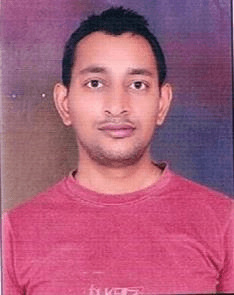
Dr. Bajrang Bansal
ASSISTANT PROFESSOR (SENIOR GRADE)
bajrang.bansal@jiit.ac.in
Biography

Dr. Bajrang Bansal is currently serving as an Assistant Professor in the Department of Electronics and Communication Engineering, Jaypee Institute of Information Technology (JIIT), Noida, Uttar Pradesh, India. He received the B.E. degree in Electronics and Communication Engineering from the Institute of Technology and Management, Gurugram, India, in 2005, the M.Tech. degree in VLSI Design and CAD from Thapar University, Punjab, India, in 2008, and the Ph.D. degree in Wireless Communication from Delhi Technological University, Delhi, India, in 2017. With over 12 years of teaching experience and 1 year in the industry, Dr. Bansal has been actively engaged in academic instruction, research, and program coordination. His expertise lies in wireless communication systems, with research interests in areas such as IRS-assisted communication, physical layer security, UWB communication, etc. Dr. Bansal has taken on several key leadership roles at JIIT, serving as Coordinator – Pre-Engineering Program, Coordinator – AICTE IDEA Lab, Member – High-End Emerging Technology Centre (ETC) and OBE Module Coordinator. He is also working in active collaboration with the Indian Institute of Science (IISc), Bangalore, fostering research partnerships to advance developments in wireless communication.

Research Highlights

Dr. Bajrang Bansal’s research focuses on Physical Layer Security, Intelligent Reflecting Surface (IRS)-assisted communication, Wireless Channel Modeling, and Ultra-Wideband (UWB) communication, aimed at advancing the design of secure, efficient, and reliable next-generation wireless networks. His key contributions include a comprehensive survey on reconfigurable intelligent surfaces for enhancing physical layer security, the development of an active IRS-based approach to mitigate the double fading effect, and an IRS-aided convex optimization-based beamforming solution for secure communication in multi-user, multi-eavesdropper NLoS MISO networks. In the domain of UWB communication, Dr. Bansal has introduced novel time-domain analytical models for wave transmission through low-loss dielectric obstacles, multilayer wall structures, and complex 3-D environments, along with heuristic and UTD-based diffraction models for lossy wedges and buildings. These innovations provide accurate performance evaluation tools and enable robust system design under realistic propagation scenarios.

His research finds applications in secure 5G/6G communication, smart and reconfigurable wireless environments, high-precision localization, and resilient communication systems for urban, indoor, vehicular, and industrial use cases. Collaborating with the Indian Institute of Science (IISc), Bangalore, Dr. Bansal’s work significantly impacts industry by improving network security, spectral efficiency, and energy utilization, while enriching academia through theoretical advancements, impactful publications, and the mentoring of future wireless technology experts.

Areas Of Interest
  • 1. IRS-assisted wireless communication
  • 2. Physical layer security in wireless communication
  • 3. Wireless Channel Modeling
  • 4. UWB Technology
  • 5. Performance analysis of Fading Channel
Publications
  1. R. Kaur, B. Bansal and S. Majhi, “Compensation of Double Fading Effect via Active RIS to Improve the System Performance,” in IEEE Transactions on Vehicular Technology, 2025, doi: 10.1109/TVT.2025.3585569.
  2. R. Kaur and B. Bansal, “An IRS-aided convex optimization-based beamforming solution for secure communication in multi-user and multi-eavesdropper NLoS MISO networks,” Sādhanā – Academy Proceedings in Engineering Sciences, Springer, vol. 50, no. 211, pp. 1–17, 2025.
  3. R. Kaur, B. Bansal, S. Majhi, S. Jain, C. Huang, C. Yuen, “A Survey on Reconfigurable Intelligent Surface for Physical Layer Security of Next-Generation Wireless Communications,” IEEE Open Journal of Vehicular Technology, vol. 5, pp. 172–179, 2024.
  4. B. Bansal, “A New UTD Based Time-Domain Solution for UWB Diffraction in 3-D Environments,” Wireless Personal Communications, vol. 118, no. 4, pp. 2365–2382, 2021.
  5. P. Tewari, S. Soni, and B. Bansal, “Time-domain solution for transmitted field through low-loss dielectric obstacles in a microcellular and indoor scenario for UWB signals,” IEEE Transactions on Vehicular Technology, vol. 64, no. 2, pp. 541–552, May 2014.