

Academic Experts
Academic Experts
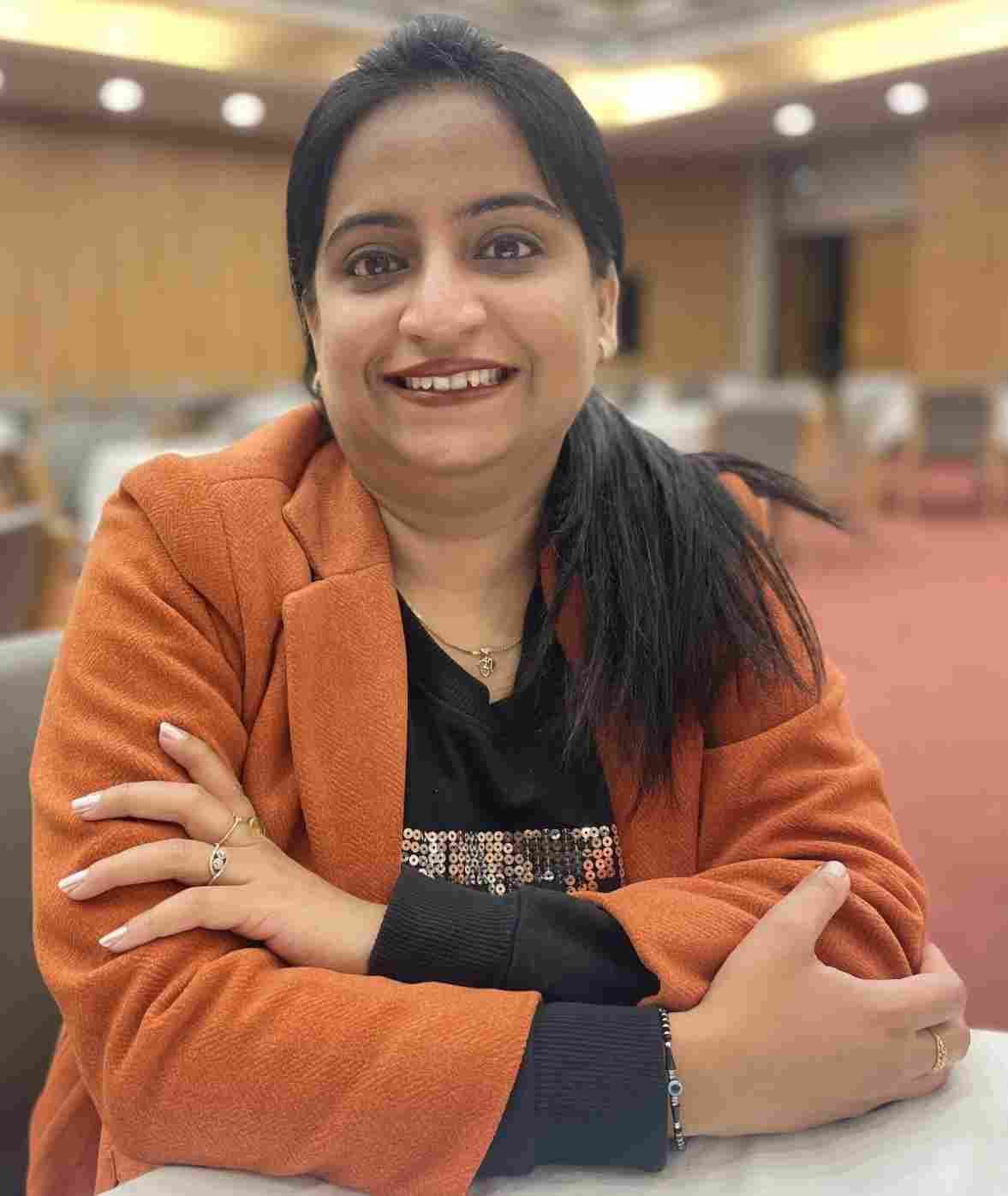
Deeksha Pandey
Assistant Professor (Grade-I)
deeksha.pandey@jiit.ac.in
Biography

Dr. Deeksha Pandey joined the Jaypee Institute of Information Technology as an Assistant Professor (Grade-I) in July 2025. Previously, she served as Project Scientist-I in the Translational Bioinformatics Group, led by Dr. Dinesh Gupta at the International Centre for Genetic Engineering and Biotechnology (ICGEB), India. She earned her Ph.D. in Biophysics Department from the University of Delhi, South Campus, in 2024 under the supervision of Dr. Manish Kumar. During her PhD she was supported by the prestigious INSPIRE Fellowship from DST. Her PhD research focuses on computational characterization of AMR mechanisms using advanced in-silico tools and machine learning approaches where she explored factors contributing to AMR in microbial pathogens. Dr. Pandey holds an MTech degree in Bioinformatics from Banasthali University, awarded with a gold medal in 2015. She has also undertaken a short-term research project at the Cancer Science Institute, National University of Singapore. She has published over 13 peer-reviewed research papers and presented at numerous national and international conferences, earning best poster, story writing and international travel awards. Actively engaged in collaborative research, she has contributed technical reports and data compilations for funding agencies such as DBT, Government of India. Notably, Dr. Pandey has contributed to national initiatives including the Framework for Exchange of Data (FeED) Protocols under the Biotech-PRIDE guidelines, and preparation of the 2024 BRIC Annual Report for DBT, reflecting her commitment to research innovation, data sharing, and science policy. Her expertise spans bioinformatics, microbiology, drug discovery, and scientific project management.

Research Highlights

Dr. Deeksha Pandey’s research focuses on uncovering the molecular and evolutionary drivers of antibiotic resistance in microbial pathogens using advanced computational approaches. Her work integrates machine learning, pattern recognition, gene ontology, and molecular modeling to analyze large-scale -omics datasets, transforming complex biological data into actionable insights for diagnostics and therapeutic development. Her core interest lies in developing AI-driven models for the identification and early prediction of antimicrobial resistance (AMR) genes, with the broader aim of supporting clinical decision-making and reducing the spread of resistant pathogens. The tools she develops incorporate advanced algorithms including Support Vector Machines (SVMs), Hidden Markov Models (HMMs), Position-Specific Scoring Matrices (PSSM), molecular docking, and biological database integration, making them applicable to multi-omics research and translational applications. During her Ph.D., she developed several in-silico tools that support the study of AMR, including: β-LacFamPred – for classification of β-lactamase enzyme families, BacARscan – for analyzing the diversity of resistance genes in microbial genomes, BacEffluxPred – for predicting bacterial efflux pump proteins and their subfamilies. During her tenure at ICGEB, she also led projects designing deep learning models for predicting P-glycoprotein inhibitors and substrates, investigating AMR genes in ESKAPE pathogens, and developing computational pipelines for biomarker discovery and systems-level AMR modeling. Dr. Pandey remains committed to advancing research and education at the intersection of bioinformatics, AMR, and translational biology, contributing to global public health solutions.

Areas Of Interest
  • Antibiotic Resistance Gene (ARG) Evolution and Surveillance
  • AI-Driven In-Silico Tool Development for Biological Features
  • Compilation of Resources (databases/Webservers)
  • Molecular Modelling & Computer-Aided Drug Discovery
  • Multi-Omics Analysis of Microbiomes and Resistomes
Publications
  1. D. Pandey, N. Singhal, and M. Kumar, “β-LacFamPred: An online tool for prediction and classification of β-lactamase class, subclass, and family,” Frontiers in Microbiology, vol. 13, Jan. 2023, doi: 10.3389/fmicb.2022.1039687.
  2. D. Pandey, B. Kumari, N. Singhal, and M. Kumar, “BacARscan: an in-silico resource to discern diversity in antibiotic resistance genes,” Biology Methods and Protocols, vol. 7, no. 1, Jan. 2022, doi: 10.1093/biomethods/bpac031.
  3. D. Pandey, N. Singhal, and M. Kumar, “Investigating the OXA variants of ESKAPE pathogens,” Antibiotics, vol. 10, no. 12, p. 1539, Dec. 2021, doi: 10.3390/antibiotics10121539.
  4. D. Pandey, B. Kumari, N. Singhal, and M. Kumar, “BacEffluxPred: A two-tier system to predict and categorize bacterial efflux mediated antibiotic resistance proteins,” Scientific Reports, vol. 10, no. 1, Jun. 2020, doi: 10.1038/s41598-020-65981-3.
  5. D. Pandey, A. Podder, M. Pandit, and N. Latha, “CD4-gp120 interaction interface - a gateway for HIV-1 infection in human: molecular network, modeling and docking studies,” Journal of Biomolecular Structure and Dynamics, vol. 35, no. 12, pp. 2631–2644, Aug. 2016, doi: 10.1080/07391102.2016.1227722.